
Press

Pourquoi la France reste si influente en Europe malgré ses faiblesses
02 October 2026
Le Point
Charles Grant, le directeur du Centre for European Reform (un laboratoire d’idées), a mis un nom sur cette anomalie en décembre 2025 : « le paradoxe de la puissance française ». Son constat tient en une phrase. Malgré le désordre parisien, la France demeure incontournable en politique industrielle, en commerce et en défense. L’élève du fond de la classe continue de rédiger les corrigés.
Andy Burnham is rethinking the UK’s ties with the EU. What are his options?
02 October 2026
Euronews
“This will have come as a moral boost for leaders,” Charles Grant, Director at the Centre for European Reform, told Euronews. “But EU officials will be thinking about the work that needs to be done now, and I think many of them will be quite hostile to what the British are saying.”
Andy Burnham's 'big gamble' to put London back at heart of Europe after Brexit blunder
01 October 2026
The Standard
‘If you rejoin the European Union, there'll be an economic boom,’ says Charles Grant, director of the Centre for European Reform.
Macron welcomes Burnham’s EU pitch, but Brussels may drive hard bargain
30 September 2026
The Times
Charles Grant, head of the Centre for European Reform, said the rise to power of populist right-wing Eurosceptic parties was stiffening resolve in Brussels to refuse concessions on the movement of people, such as Britain has been seeking.
There is also no appetite in the EU for Britain, one of the biggest European economies, to forge a Swiss-style piecemeal arrangement with the EU.
There is also no appetite in the EU for Britain, one of the biggest European economies, to forge a Swiss-style piecemeal arrangement with the EU.

Times Radio: UK rejoining the EU?
30 September 2026
"I think what's driving this is desire to get economic growth, because he [Andy Burnham] understands that what Starmer was doing with the nitty gritty piecemeal negotiations on things like youth mobility and merging the emissions trading schemes and so on, we're not going to deliver anything very dramatic in terms of economic growth.

Brexit years were grim and hateful – it’s time to rejoin
30 September 2026
iNews
According to researchers John Springford and Anton Spisak, “the single market accounted for the overwhelming majority of Brexit’s trade impact on UK-EU trade”.
Burnham’s EU push reopens Labour’s Brexit divide
28 September 2026
Politico
“In the short term I’m quite gloomy. I think the summit which was supposed to happen in November may not happen at all,” Charles Grant, director of the Centre for European Reform think-tank told a fringe event. “Unless someone is willing to compromise there may not be a summit at all this year, I hope I’m wrong on that.”

‘China has arrived’: From $1,000 Gucci sneakers to German cars, China is coming for the industries that made Europe rich
27 September 2026
Fortune Magazine
“China has already eaten much of [the] German industry’s lunch and is preparing to start on dinner,” economists Brad Setser and Sander Tordoir wrote in May.

Unpacking Europe: Scaling innovation in Europe
24 September 2026
James Green spoke with Claudia-Dominique Geiser and Marlene Schörner on how to scale up innovation in Europe to strengthen economic competitiveness and support strategic technologies.

Germany’s military power is growing. That makes some Europeans uneasy
20 September 2026
The iPaper
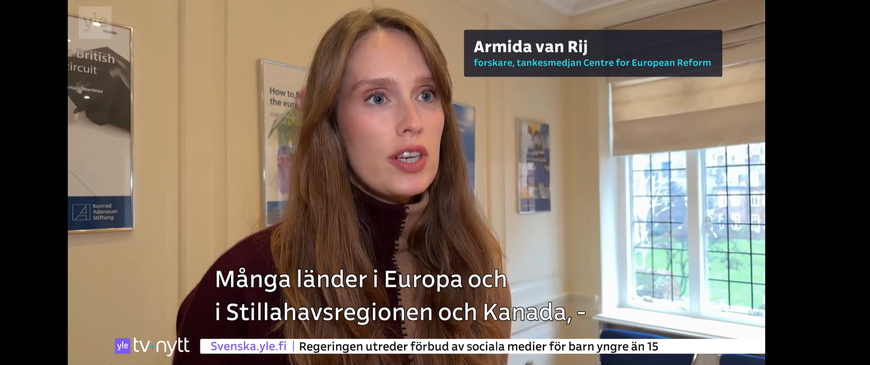
No other country in Europe can bring such economic power to bear, said Armida van Rij, a European security specialist at the Centre for European Reform think-tank. “There is a recognition that we need Germany, in particular, because they have the fiscal headroom and they have the money,” she said, noting that France, Italy and the UK are “more constrained”.
Britain’s rush to net zero fuelled China’s energy dominance
20 September 2026
The Telegraph
The lesson here is that once an industrial ecosystem has been lost to China it is extremely difficult to rebuild, argues Sander Tordoir, the chief economist at the Centre for European Reform.
“European governments have to think very carefully about ecosystem effects,” he adds.
...China has been able to build “massive industrial capabilities in the lower rungs of clean tech”, he says, before moving into the “higher rungs of the value chain”.
“European governments have to think very carefully about ecosystem effects,” he adds.
...China has been able to build “massive industrial capabilities in the lower rungs of clean tech”, he says, before moving into the “higher rungs of the value chain”.

Ekspert: koalicja antybalistyczna pomoże trwale zmniejszyć zależność od USA
18 September 2026
Polska Agencja Prasowa
Koalicja antybalistyczna, do której przystąpienie ogłosiła Polska, dowodzi, że Europa uniezależnia się od USA i nie zmieni tego koniec kadencji prezydenta Donalda Trumpa - uważa Ian Bond, wiceszef think tanku Centre for European Reform.
Why Europe really, really needs a mild winter
18 September 2026
The New York Times
In general, Europe has resisted being drawn into an expensive repetition of the 2022 energy crisis. Then, “governments were willing to pay any price to refill gas storage,” said Sander Tordoir, chief economist at the Centre for European Reform.

America’s AI slowdown brings little comfort to Europe’s markets
15 September 2026
The Times
A joint new report from three think-tanks, the Centre for European Reform, the Jacques Delors Centre, and the Bertelsmann Stiftung, lays out the parlous state of Europe’s stock markets, which are failing to provide the continent’s most innovative, promising companies with the capital to grow and compete with their US counterparts.
Bond market fears thwart EU energy crisis plan
15 September 2026
EurActiv
Sander Tordoir, chief economist at the Centre for European Reform, noted that many EU countries might seek to “roll out some fiscal cushions” for citizens and firms if energy prices remain elevated this winter.
“My general sense is that, other than Greece and Italy, the bond market rather than the EU fiscal rules are the first concern,” Tordoir said, adding that many countries are already “flying close to the sun” in fiscal terms.
“My general sense is that, other than Greece and Italy, the bond market rather than the EU fiscal rules are the first concern,” Tordoir said, adding that many countries are already “flying close to the sun” in fiscal terms.
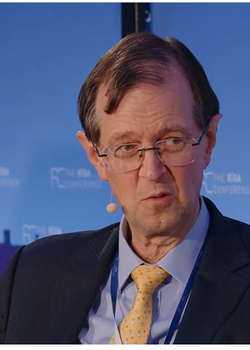
LATO: The Rīga Conference 2026 - Ukraine's future as a pillar of European security
10 September 2026
Ian Bond deputy director of the CER spoke alongside the Lithuanian Vice Foreign Minister Lina Rukštelienė in a discussion with Yaroslav Trofimov on Ukraine's future as a pillar of European security (from 4:35:40 mins).

Unpacking Europe: Ceuta and Schengen
09 September 2026
Ian Bond spoke with Camino Mortera-Martinez on the impact that 80,000 migrants entering the Spanish exclave of Ceuta has had on the EU’s borderless Schengen area.

VRT Max: Radio 1: Europese kwaliteit boven Chinese prijzen: Europese Commissie presenteert nieuwe regels rond openbare aanbestedingen
09 September 2026
De Europese Commissie heeft nieuwe regels voorgesteld rond openbare aanbestedingen. De focus ligt daarbij meer op Europese productie en de mogelijkheid om China uit de markt te weren. Sander Tordoir, hoofdeconoom van de Europese denktank Centre for European Reform: "In feite trekt Europa hiermee het speelveld gelijk."
Germany once cosied up to Putin. Now they are Russia’s public enemy number one in Europe
03 September 2026
The Independent
Ian Bond, the deputy director of The Centre for European Reform (CER), said the signing of the 2015 Minsk II Agreement was another indicator of the strength of Russian-German relations at the time.Brokered under Merkel, the deal was widely criticised as effectively signalling Western acceptance of Russia's illegal annexation of Crimea.
Esperti Ue, 'Industrial Accelerator Act può essere principale strumento contro Cina'
02 September 2026
ANSA
"L'Industrial Accelerator Act potrebbe essere il principale strumento politico che l'Ue può effettivamente mettere in atto" contro la sovraccapacità produttiva cinese. Lo afferma il capo economista del think tank Centro per la riforma europea (CER), Sander Tordoir, in audizione alle commissioni congiunte Inta, Itre e Imco del Parlamento europeo.